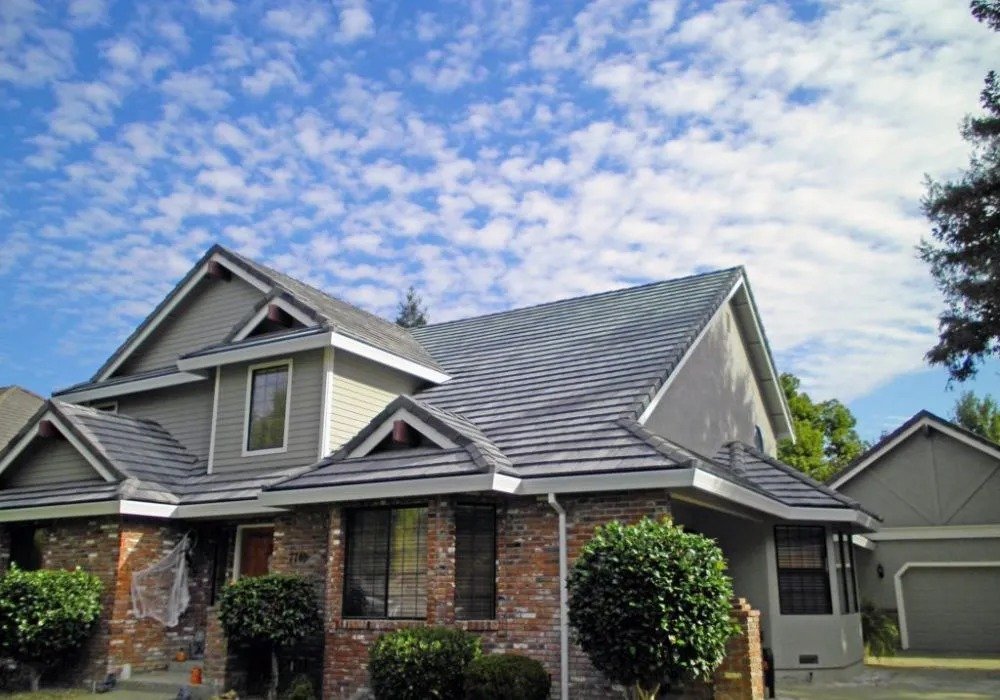
Ice dam shielding is one of those roof components nobody ever notices until water starts showing up on the ceiling sometime in mid-February. The shielding itself is a self-adhering rubberized membrane that goes underneath the shingles at the spots on the roof most likely to take on water during a storm. What it does is straightforward. Snowmelt backs up behind an ice dam at the roof edge, finds its way under the shingle layer, and the membrane stops it there. Without that membrane in place, the backed-up water has nothing between it and the ceiling drywall in the rooms below. With it, water has nowhere to go and eventually drains harmlessly off the roof once temperatures climb.
Worth understanding, too, is that ice dam shielding is mandated by building code in most cold-climate jurisdictions, and the reason is the freeze-thaw pattern that Towson winters produce regularly. Snow accumulates on the roof during a storm. Heat from inside the house warms the attic just enough to start melting the underside of the snowpack. The meltwater runs down to the colder eaves and refreezes into an ice ridge. More melt comes. The ridge gets thicker. Water pools behind it. And the only thing between that pooled water and the inside of the house is whatever sits underneath the shingles right at the roof edge. So, a residential roofing contractor in Towson installing a roof without proper ice-barrier shielding leaves the homeowner facing a damage scenario that costs five figures to clean up the day it actually happens.
Towson homeowners have several roofing options for full replacement work. Magnum Home Services, LLC is one of the Towson-area residential roofing contractors that standard practice is to install ice barrier shielding on replacements. None of this is a recommendation of any particular contractor. What’s ahead is a walkthrough of what ice dam shielding actually does, where it belongs, what code requires, and how it fits into the larger system of ice dam prevention.
What Is Ice Dam Shielding
The product itself. A self-adhering rubberized asphalt membrane. Sometimes called ice and water shield, ice barrier, or by trade names like Grace Ice & Water Shield or GAF Stormguard. Rolls run about three feet wide and 75 feet long. There’s a release liner on the underside that peels off during installation. Once exposed, the membrane bonds tightly to the roof deck below and to itself at the overlaps, forming a continuous waterproof barrier across the covered area.
The property that matters most is self-sealing around penetrations. When shingles get nailed through the membrane while the roof goes on, the rubberized asphalt closes around each nail shaft, sealing the puncture. Standard felt paper underlayment doesn’t do that. Most synthetic underlayments don’t either. Rubberized asphalt membranes are the only category with this self-sealing property. Which is exactly why they belong at the roof edge, where ice dam water actively tries to find a way in.
See also: Crypto and the Future of Digital Transactions
Why Towson Houses Need This Protection
Towson sits in a climate zone where ice dams really do happen. Not every winter. Not even most years. Often enough, though, installing a roof without proper ice-barrier protection is gambling on water damage over a multi-decade period.
The University of Minnesota Extension’s resource on dealing with and preventing ice dams is the gold-standard reference on how ice dams form and the conditions that produce them. The recipe needs three ingredients. Snow is sitting on the roof. A roof surface above freezing (usually due to attic heat leakage). A roof surface below freezing at the eaves. Towson sees all three regularly during winter storms that swing through different temperature bands, which is the exact pattern that builds dams.
Shield Alone Isn’t Enough
Ice barrier shielding catches water that reaches the deck after a dam has already formed. It does nothing to stop the dam from forming in the first place. So the shield is the last line of defense, not the only one. The actual fix for chronic ice dam problems isn’t on the roof at all. It’s in the attic.
The Department of Energy’sguide to attic air sealing walks through the building science behind it. Heat leaking from the conditioned space into the attic warms the roof deck. The warm deck melts snow from underneath. The melt then refreezes at the colder eaves, building the dam. Seal the air leaks between the house and the attic, layer in adequate insulation across the attic floor, and the deck stays cold enough that snow doesn’t melt to begin with. No melt, no dam.
The Attic Side of the Equation
A properly addressed ice dam risk involves three coordinated interventions. Sealing the attic floor airtight to stop heat from escaping upward. Insulating the attic floor to required R-values (R-38 to R-49 depending on the local climate zone). Ventilating the attic so that any heat that does sneak in gets exhausted before it warms the deck above it.
Skipping any one undermines the other two. Insulation alone, without air sealing, creates leakage paths around it that undermine its R-value. Ventilation alone, without insulation, just pulls more conditioned air out of the house through the attic and into the outside. Air sealing without sufficient insulation leaves the deck warmer than the still-outside air. All three must be addressed together for the whole system to work as intended.
A roofing contractor running a full replacement is well-positioned to evaluate the attic side while the roof is open. Recommend what’s needed. Handle the work directly if they’re equipped to do so, or refer the homeowner to an insulation specialist who can. The roof replacement alone won’t solve chronic ice-dam problems on a house with significant attic deficiencies. When combined with attic work, this produces a system that stays dry through whatever the winter throws at it.